
Call Us :
+86 -13376077792

Email Us :
info@cnbesten.com
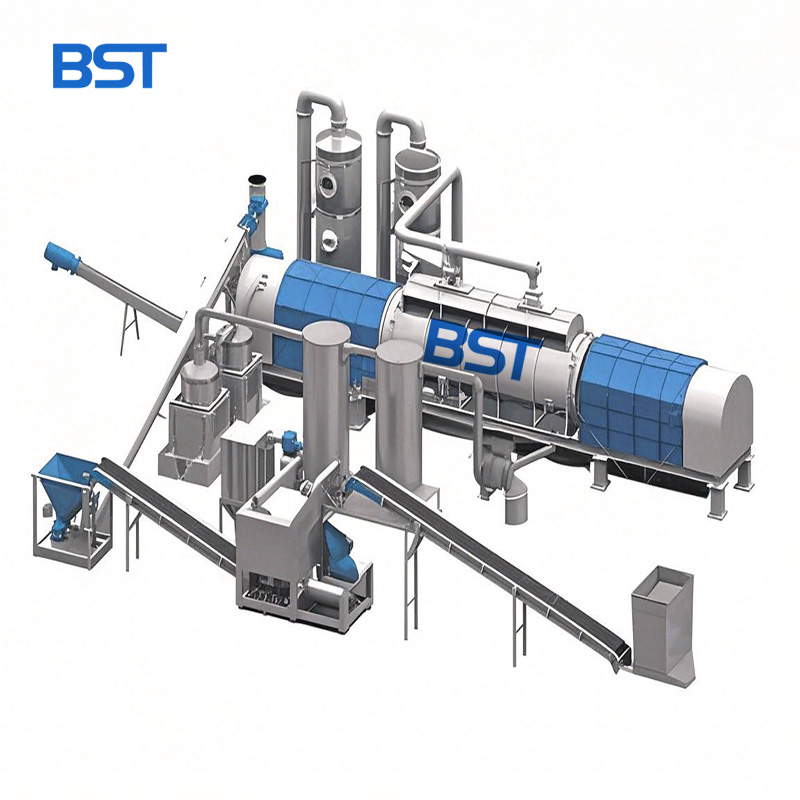
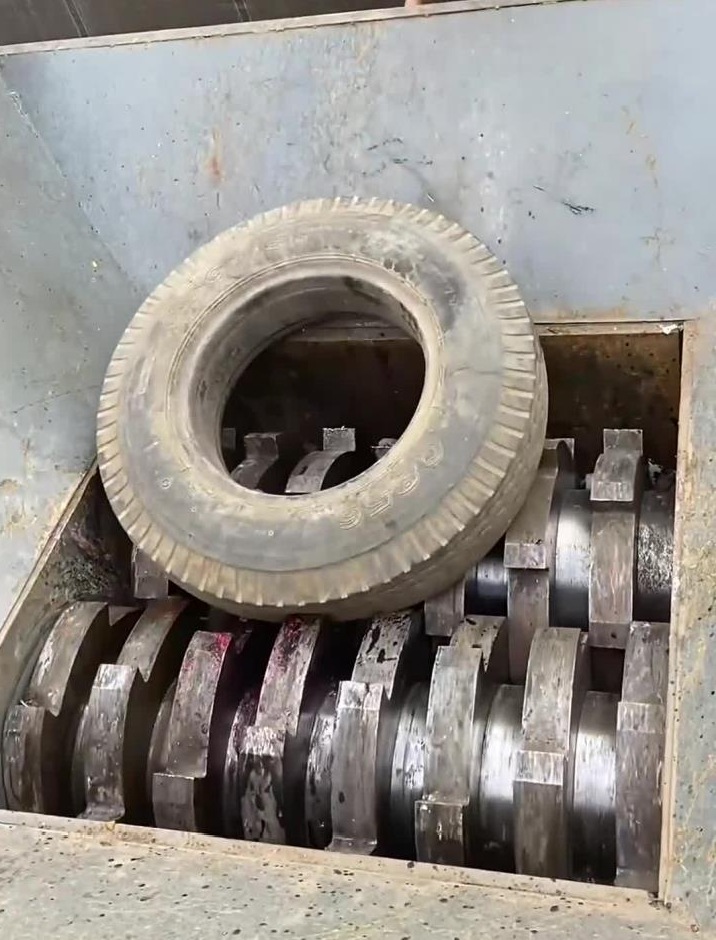
Essentially, the machine consists of an electric motor, a reducer (gearbox), and the shredding unit itself. Densely arranged cutters are mounted on two parallel shafts that rotate slowly in opposite directions. When operational, tires are fed into the machine via a conveyor, where they are torn apart through the shearing, tearing, and squeezing action between the intermeshing cutters. The shredded material is then carried away by a discharge conveyor.
Operating on the principle of low-speed, high-torque action, the tire shredder is designed for powerful crushing force, high output, low noise, and stable performance. It is commonly used in environmental protection for volume reduction, resource recovery, pre-treatment for waste incineration, and landfill management.
Based on their working process, tire shredders can be categorized into dry, wet, and semi-wet systems. Dry systems typically use air separation and dust removal, while wet systems employ water spray during shredding and washing during sorting. Semi-wet systems use minimal water only to control dust.
This versatile machine continues to support recycling efforts by efficiently processing tough materials like discarded tires and bulky waste.
 English
 Français
 Русский
 Español
 Português
 عربي
عربي 日语
日语